
If you’ve ever Googled “how much do content creators make,” you’ve probably seen everything from $0 to millions. The truth is more nuanced … and far more interesting.
Using aggregated, anonymized financial data from 1,000+ full-time creators earning at least $60,000 annually, our 2025 Creator Income Report breaks down real creator earnings, platform performance, revenue diversification, affiliate income, and tax strategy decisions shaping today’s creator economy.
Here’s what the data shows:
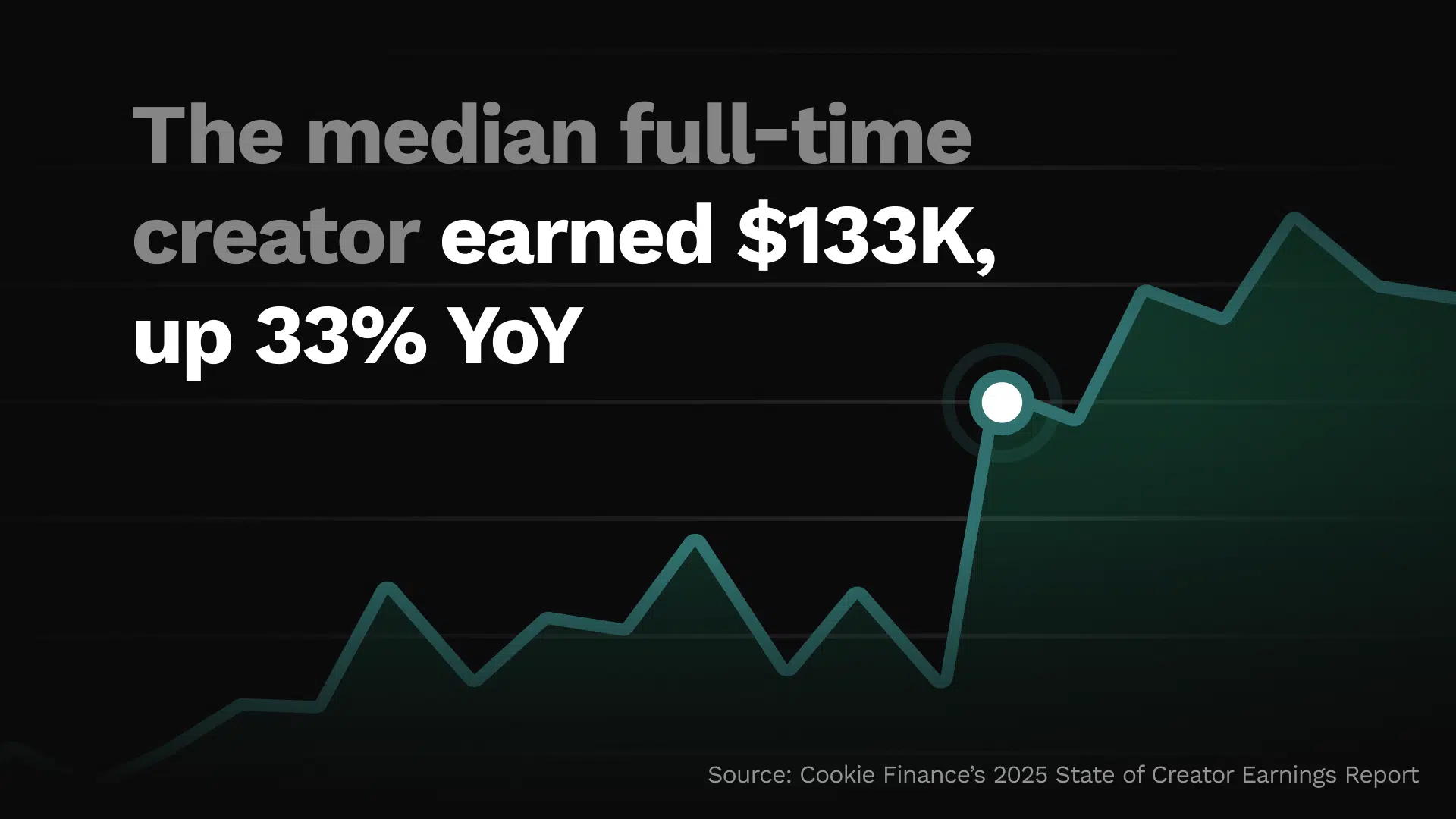
- Median full-time creator income in 2025: $133,000 (up 33% YoY)
- YouTube median earnings: $141,000 – the highest and most stable platform
- TikTok median earnings: $131,000 – high upside, but high volatility
- Creators with 3+ revenue streams earn $75,000 more on average
- Affiliate-led creators are 1.4x more likely to exceed $250,000 annually
- S-Corporation creators save an average of $8,500 in taxes
The bigger takeaway? Platform choice is now a financial decision. Diversification is defensive. And infrastructure directly impacts net income. The creator economy in 2026 isn’t slowing down. It’s professionalizing.
If you want the full breakdown, including YouTube vs TikTok vs Instagram earnings, affiliate revenue volatility, income distribution trends, and when S-Corp status actually makes sense:
How We Analyzed 1,000+ Full-Time Creator Earnings
To professionals inside the ecosystem, the idea that content creation is “just a side hustle” feels severely outdated. Many creators have moved well beyond experimentation, building full-time businesses that generate consistent income year over year, even if the broader narrative hasn’t fully caught up.
Through our work at Cookie Finance, where we support creators with accounting, bookkeeping, and taxes as their businesses scale, we have visibility into one of the largest creator-focused financial data sets in the industry.
The insights below are based on anonymized 2025 financial data from creators earning at least $60,000 annually from their content. While some creators may also have a W-2 role or household income elsewhere, each creator included generates enough creator revenue to operate at a full-time level.
YouTube vs TikTok vs Instagram: Which Platform Pays Creators More?
For full-time creators, platform choice is no longer just a creative decision but rather it’s a financial one. Each major platform now operates as a distinct monetization environment with different risk and reward profiles.
In 2025:
- YouTube creators earned the highest median income at $141,000, making it the top-earning platform overall.
- TikTok creators followed at $131,000, while Instagram creators earned $105,000.
TikTok’s growth was driven largely by TikTok Shop and social commerce, enabling creators to convert attention into purchases quickly. That upside, however, came with plenty of volatility. TikTok creators experienced the largest income swings, with monthly earnings fluctuating an average of 58%.
By contrast, YouTube offered the most stable income. Its blended monetization ecosystem, AdSense, evergreen discovery, and brand partnerships supported more consistent earnings over time.
Within YouTube, strategy mattered: creators who layered in brand deals earned approximately $64,000 more than those relying on AdSense alone, an 80% increase.
The takeaway isn’t that one platform is better than another; it’s that platforms reward different risk profiles.
Why Revenue Diversification Is the Strongest Predictor of Creator Income
Among full-time creators, diversification emerged as one of the strongest predictors of income. In 2025, 25% of creators operated three or more revenue streams, earning $75,000 more on average than creators relying on a single source of income.
Importantly, diversification didn’t mean being everywhere. Many creators layered platform revenue, affiliates, subscriptions, brand deals, and digital products within a single platform, prioritizing depth over reach.
This shift reflects growing awareness of platform risk. Algorithm changes, monetization updates, and regulatory uncertainty have made single-stream dependency increasingly fragile. As a result, only 23% of creators now rely primarily on brand deals, despite brand partnerships remaining meaningful.
For full-time creators, diversification isn’t about doing more, but it’s about building income that doesn’t disappear when the rules change.
Creator Income Highlights (2025)
- Median full-time creator income: $133,000
- YouTube median earnings: $141,000
- Diversified creators earn: +$75,000
- Average S-corp tax savings: $8,500
Affiliate Revenue Unlocks Scale … With Volatility as the Tradeoff
Creators who centered their monetization around affiliate links were 1.4x more likely to earn over $250,000 annually than creators relying primarily on brand deals.
Unlike sponsorships constrained by deal volume and timelines, affiliate income scales quite differently and compounds with trust, distribution, and purchasing behavior. In 2025, the rapid rise of social commerce accelerated this shift, reinforcing that creator-led commerce is not a temporary trend.
That said, affiliate-heavy creators were more exposed to income swings tied to algorithms, product availability, seasonality, and consumer demand. As affiliate monetization becomes dominant at the top end, volatility has become structural, not incidental.
The creators best positioned for long-term success paired affiliate upside with stabilizing revenue streams, treating affiliates as a growth engine rather than a sole foundation.
Earnings Are Rising and Becoming Less Top-Heavy
Across this creator cohort, earnings continued to rise meaningfully.
- Median income reached $133,000, up 33% YoY
- Creators earning $150,000+ increased by 34%
Rather than concentrating among a small elite, income growth spread across a broader segment of creators who adopted more repeatable business models. A key driver was mindset: creators who began to view themselves as business operators and not just internet personalities were more likely to diversify, formalize operations, and sustain income over time.
The path to higher earnings is becoming less about breakout moments and more about systems.
How S-Corporations Help High-Earning Creators Save on Taxes
As creator income grows, operational decisions increasingly affect net income. Among creators who transitioned to an S-Corporation, average tax savings totaled $8,500. More broadly, higher-earning creators were more likely to separate finances, track cash flow, and plan proactively.
What stood out was not just the impact of these decisions, but the timing of them. The transition from “creator” to “creator business” isn’t defined by audience size alone; it’s marked by income becoming predictable enough to plan around. At that stage, infrastructure becomes essential for sustainability, not just compliance.
From our position working closely with creators across different income levels, we see clear signals around when these structural shifts begin to make sense. Creators who made changes in response to income stability, rather than prematurely or reactively, were better positioned to preserve their earnings.
What This Signals About the Creator Economy
The 2025 data points to an economy defined less by growth alone and more by sustainability and reduced friction. Creators are earning more, diversifying earlier, and structuring their businesses to remove obstacles between themselves and their work. As income scales, friction like administrative burden, uncertainty, and reactive decision-making becomes one of the biggest constraints on growth.
This has ecosystem-wide implications. When creators are slowed down, platforms, brands, and audiences all feel it. When friction is reduced, output, consistency, and trust increase across the board.
From our vantage point at Cookie Finance, the creators who thrive long-term aren’t chasing every opportunity; they’re building systems that allow them to focus on what matters most. The creator economy isn’t slowing down. It’s professionalizing. And its next phase will be defined by how effectively it enables creators to create.
If you’re looking for support as your creator income grows, our team is here to help. We work exclusively with content creators on bookkeeping, tax planning, and financial structure so you can focus on creating. Book a call with our team, and we’ll walk through your situation together.
For agency inquiries or other executives looking to connect, email us anytime at hey@cookiefinance.co.